On the surface, the White House Correspondents’ Dinner (WHCD) is a glittering spectacle—gowns, cocktails, and A-list celebrities mingling with journalists and politicians. But in an instant, that veneer of glamour shattered. Actor Zachary Levi, known for his roles in Chuck and Shazam!, found himself in the middle of a scene no script could justify: a live shooting incident that sent shockwaves through the ballroom. His firsthand account offers a rare glimpse into the chaos, confusion, and human instinct that erupted when real danger invaded a night meant for satire and celebration.
Levi, seated near the center of the room, was mid-conversation when the first loud noise cut through the air. Many initially mistook it for a prop—a comedic bit perhaps, or a malfunctioning mic stand. But within seconds, the tone shifted. Screams rose. Chairs scraped. The crowd began to move.
“I heard something that sounded like a firecracker, then another, and then people started dropping,” Levi later recounted in media interviews. “It wasn't until I saw people running toward the exits and the staff yelling ‘Get down!’ that I realized this was real.”
The First Seconds: Confusion and Survival Instincts
The initial moments of any public disturbance are often defined by hesitation. In high-profile events like the WHCD, where security is visible but often unobtrusive, guests are conditioned to believe they’re safe. That sense of security becomes a liability when danger strikes.
Levi described how the laughter from the podium froze mid-joke. The comedian on stage paused, confused. Then came a third sound—louder, sharper—and the room erupted.
“I turned to my date and said, ‘We need to go. Now.’ But the exits were already clogged. People were trying to climb over tables. Someone lost a shoe. A woman next to me dropped her clutch and didn’t even stop to pick it up.”
Security personnel reacted quickly, but the sheer volume of people—over 2,600 attendees—meant evacuation wasn’t orderly. Levi noted that some tried to film the commotion, while others froze entirely, unsure whether the sounds were part of the entertainment.
This hesitation is common in mass casualty situations. Studies show that the brain often defaults to pattern recognition: if a loud noise happens at a party, it’s likely a balloon popping. Only when the pattern breaks—repeated shots, visible panic—does the threat register.
Levi’s response followed a textbook survival arc: assess, act, assist. “Once I realized it wasn’t a joke, I started looking for the safest route out. Not the fastest—safest. I didn’t want to run blindly into the line of fire.”
Inside the Ballroom: A Breakdown of the Scene
The ballroom at the Washington Hilton, where the WHCD is traditionally held, spans over 30,000 square feet. Long tables fan out from the stage, packed with guests, journalists, and political figures. When the shots rang out near the west entrance, the disruption cascaded across the room like a wave.
Levi recalled seeing journalists abandoning their live broadcasts mid-sentence. Camera operators dropped gear. One reporter was seen pulling a colleague under a table.
“The surreal part was how fast normalcy disappeared,” he said. “One second, we’re toasting the First Amendment. The next, we’re crawling under tables, trying not to make a sound.”
Eyewitnesses reported between three and five distinct gunshots. The shooter, later identified as a lone individual with no known ties to terrorist organizations, was apprehended within eight minutes by DC Metro Police and WHCD security detail.
Levi emphasized that the presence of trained personnel—both uniformed and plainclothes—likely prevented greater casualties. “I saw agents moving toward the sound, not away. That gave me some sense of control, even in the middle of chaos.”
Celebrity Perspective vs. Public Misconception
When a celebrity speaks about trauma, their account often gets framed through the lens of privilege or exaggeration. But Levi’s testimony aligns closely with law enforcement reports and other eyewitnesses, lending credibility to his version of events.
Still, some media outlets questioned the severity of the incident, citing the low number of physical injuries. Only two people were treated for minor wounds—one from shattered glass, another from a fall during evacuation.
But Levi pushed back on that narrative. “People assume no blood means no trauma. That’s not how it works. I’ve had nightmares since. I flinch at loud noises. My therapist says I’m experiencing acute stress symptoms. It doesn’t matter if I wasn’t shot—I was in danger. So were hundreds of others.”
His comments underscore a growing conversation about psychological safety at public events. The absence of physical injury doesn’t negate emotional harm. For attendees, especially those unaccustomed to crisis situations, the aftermath can linger long after the headlines fade.
Security Gaps and the Illusion of Safety
Despite layers of screening and federal coordination, the shooter managed to breach outer security with a concealed firearm. While details remain under investigation, early reports suggest the weapon was smuggled in during an equipment delivery, bypassing standard guest checks.
Levi, reflecting on the lapse, said: “We all walked through metal detectors. But the people bringing in the sound systems, the lighting—do they get the same level of scrutiny? I don’t know. But someone got a gun into a room full of journalists and politicians. That should scare everyone.”
This incident has reignited debate over event logistics and contractor vetting. While guests are screened, third-party vendors often move through less-monitored access points. Experts argue that comprehensive threat assessments must include supply chains, not just attendees.
Levi now advocates for stricter protocols at high-profile gatherings. “If you’re inviting 2,600 people, you need a plan for every possible entry point—not just the front door.”
The Role of Public Figures in Crisis Narratives
Celebrities like Zachary Levi occupy a unique space in crisis reporting. Their visibility amplifies stories, but it also invites skepticism. When Levi shared his experience on social media, some commenters accused him of seeking attention. Others praised his candor.
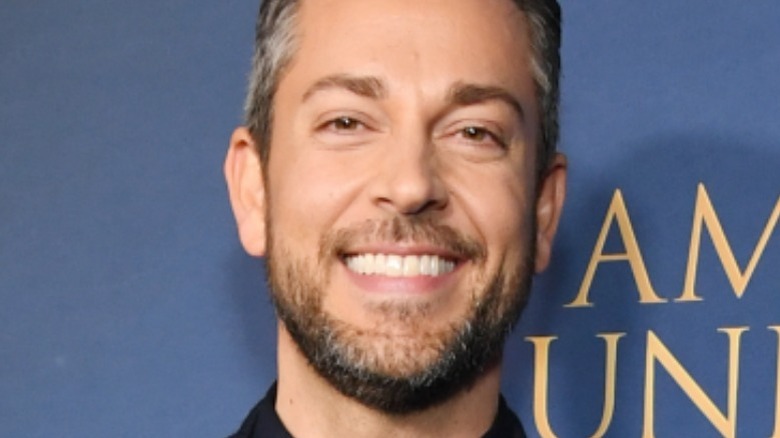
But his account served a broader purpose: humanizing an event that could easily be reduced to statistics. “I didn’t speak up to be a hero,” he said. “I spoke up so people understand this isn’t just a ‘DC problem’ or a ‘political problem.’ It’s a people problem. Anyone can be in that room. It could’ve been a school gala. A concert. A wedding.”
By grounding the incident in personal emotion—fear, disorientation, guilt—he made the threat tangible. And in doing so, he sparked conversations about preparedness, mental health, and the fragility of public trust.
What Attendees Can Learn from the WHCD Incident For those who attend or organize large events, the WHCD shooting offers hard lessons:
- Situational awareness matters more than proximity to exits. Levi noted that many rushed the nearest door, creating bottlenecks. Knowing multiple escape routes improves survival odds.
- Trust your instincts. If something feels off, it probably is. Delayed reactions are common, but a split-second decision can be life-saving.
- Avoid filming during active threats. While documentation is valuable, recording instead of evacuating puts you and others at risk.
- Mental health follow-up is essential. Trauma isn’t exclusive to physical injury. Employers and event organizers should provide crisis counseling post-incident.
- Security must be holistic. Screening guests isn’t enough. Every person and package entering the venue needs scrutiny.
Levi’s experience illustrates how unprepared most civilians are for active threats—even in spaces perceived as elite or secure. “We rehearse fire drills at work,” he said. “Why not basic response training for public events?”
A Call for Change, Rooted in Experience
Zachary Levi didn’t set out to become a public safety advocate. But the events of that night changed his perspective. He’s since partnered with organizations focused on crisis response training for civilians and improved security protocols for live events.
“We can’t live in fear,” he said in a recent panel discussion. “But we can be smarter. We can be prepared. And we can support each other when the unthinkable happens.”
His testimony isn’t just a recounting of panic—it’s a roadmap for resilience. From the first misheard pop to the long road of emotional recovery, Levi’s story reminds us that safety isn’t guaranteed by prestige or protocol. It’s built through awareness, preparation, and collective responsibility.
For anyone who’s ever dismissed the idea of “what if” at a public gathering, Levi’s account is a wake-up call. Because when the lights dim and the music stops, the only thing that matters is what you do next.
FAQ What was Zachary Levi doing at the WHCD? He was an invited guest, attending as a prominent entertainment figure and advocate for media freedom.
Did Zachary Levi see the shooter? No, he did not get a clear view of the individual. He heard the shots and reacted to the crowd’s panic.
How did security respond during the incident? Security reacted within seconds, directing evacuations and neutralizing the threat in under ten minutes.
Was the WHCD shooting widely reported? Yes, major news outlets covered the incident, though initial reports were cautious due to confusion over what occurred.
Has Zachary Levi spoken about PTSD since the event? Yes, he has openly discussed experiencing stress symptoms and undergoing therapy.
Were there casualties during the WHCD shooting? No fatalities were reported. Two individuals sustained minor injuries during the evacuation.
Is Zachary Levi involved in any safety initiatives now? Yes, he’s collaborating with nonprofit groups to promote crisis preparedness at public events.
FAQ
What should you look for in Zachary Levi Recalls Chaos During WHCD Shooting? Focus on relevance, practical value, and how well the solution matches real user intent.
Is Zachary Levi Recalls Chaos During WHCD Shooting suitable for beginners? That depends on the workflow, but a clear step-by-step approach usually makes it easier to start.
How do you compare options around Zachary Levi Recalls Chaos During WHCD Shooting? Compare features, trust signals, limitations, pricing, and ease of implementation.
What mistakes should you avoid? Avoid generic choices, weak validation, and decisions based only on marketing claims.
What is the next best step? Shortlist the most relevant options, validate them quickly, and refine from real-world results.