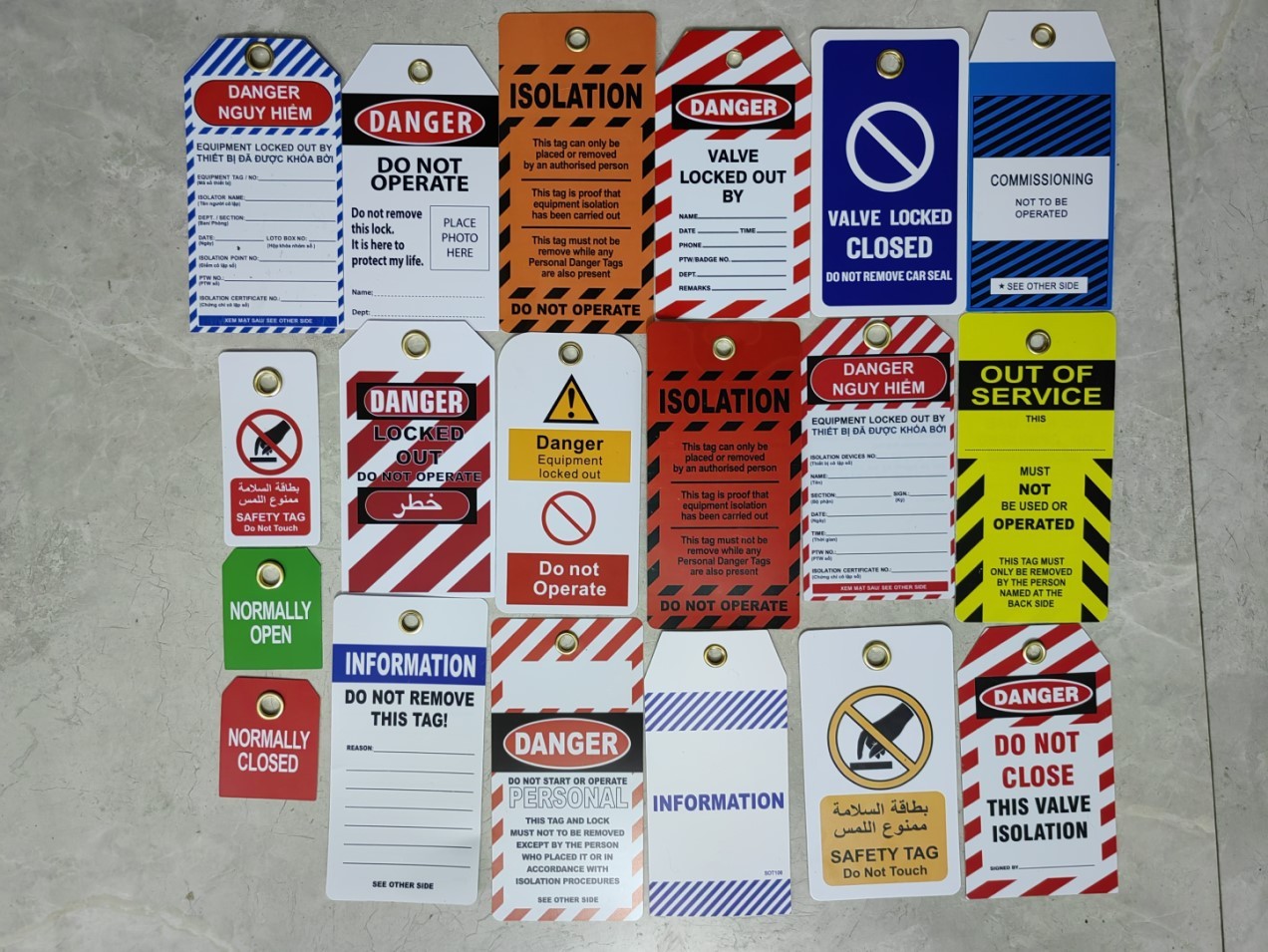
When a maintenance technician reaches for a generic LOTO tag that reads “Do Not Operate – Equipment Under Maintenance,” but the machine has 17 isolation points, three energy sources, and a history of miscommunication incidents, that tag doesn’t inform—it fails. Generic tags assume uniformity in environments where precision is non-negotiable. Custom lockout tagout tags aren’t a luxury upgrade. They’re a critical layer of protection in high-risk industrial workflows where ambiguity can lead to catastrophic outcomes.
Why Standard LOTO Tags Fall Short
OSHA’s Control of Hazardous Energy standard (29 CFR 1910.147) mandates that energy-isolating devices be tagged during servicing. But the regulation doesn’t prescribe tag content—only that they warn against operation and identify the authorized employee. This gap is where generic tags fail most often.
Consider a chemical plant’s centrifuge. It draws power from electricity, pneumatic lines, and hydraulic systems. A standard tag might list “Electrical Lockout in Progress.” Missing: the fact that residual pressure in the hydraulic line requires a 15-minute bleed-down. Missing: the lock number assigned to the maintenance team. Missing: site-specific emergency contacts.
Without specificity, tags become visual noise—seen but not processed. Workers grow numb to repeated, vague warnings. In environments with multiple shifts, overlapping maintenance windows, or complex machinery, that desensitization is dangerous.
Custom lockout tagout tags fix this by replacing assumptions with actionable data.
The Anatomy of an Effective Custom LOTO Tag
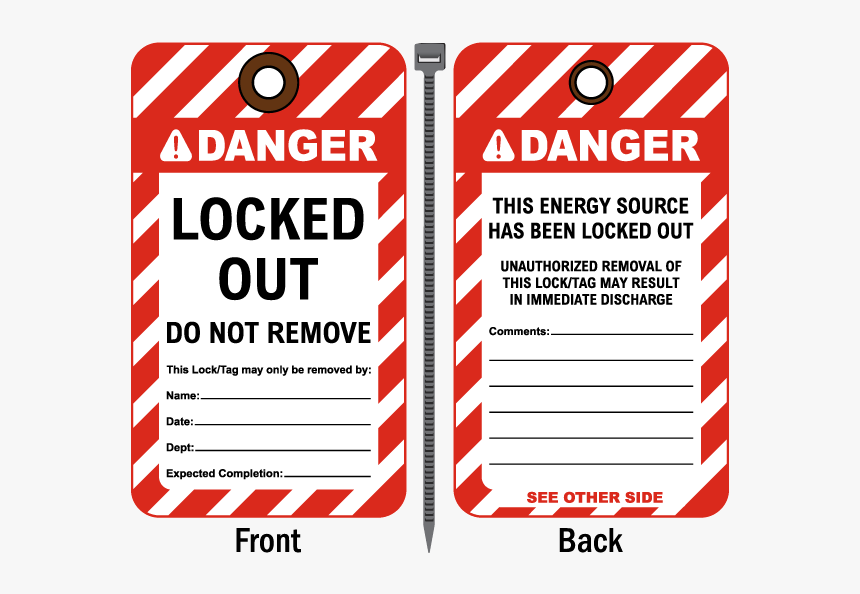
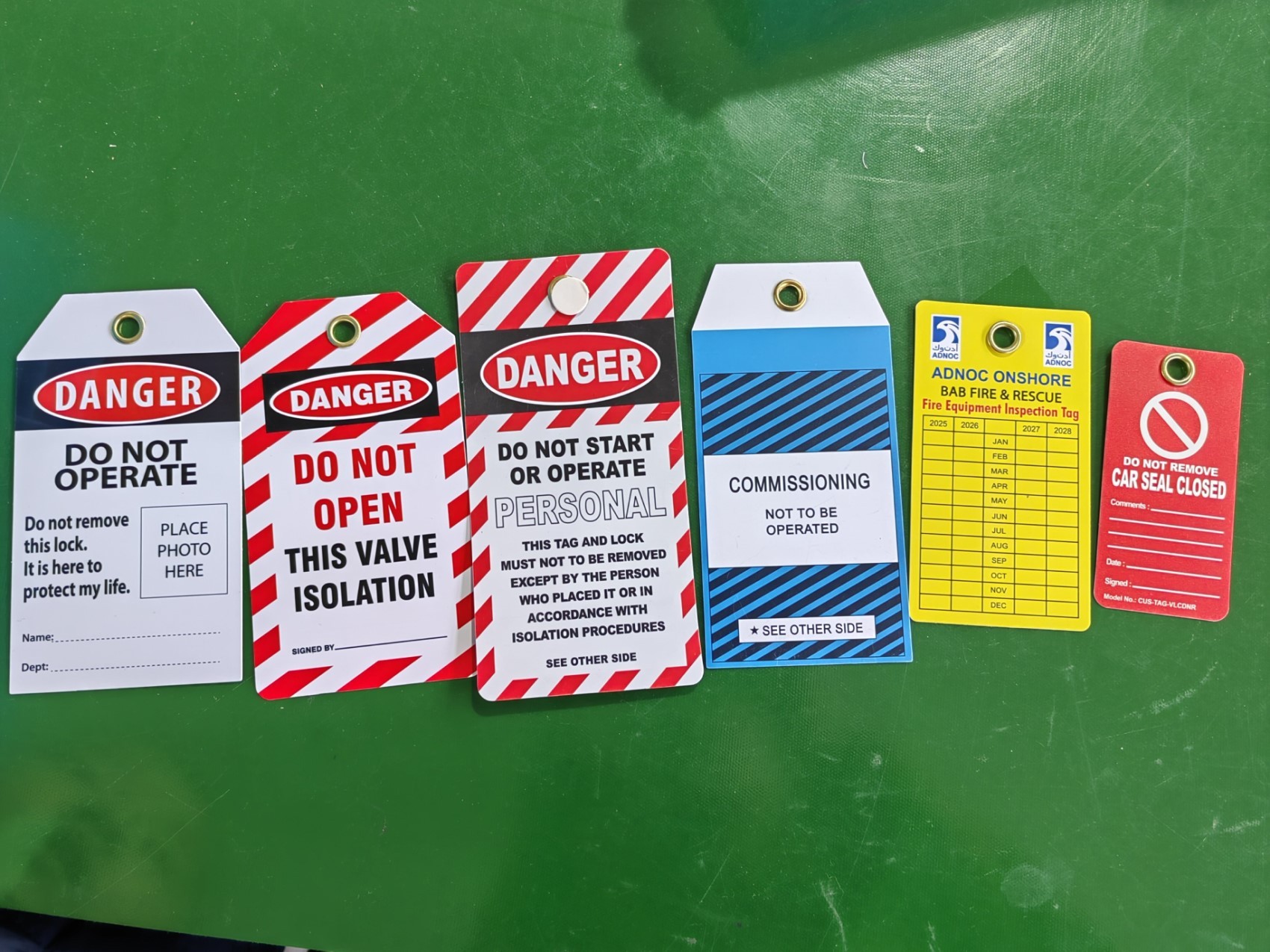
A well-designed custom tag isn’t just personalized—it’s engineered for clarity and compliance. Key elements include:
- Employee Identification: Full name, employee ID, department
- Date and Time: Start of lockout, expected completion
- Energy Source Details: Electrical, mechanical, hydraulic, chemical, thermal
- Equipment ID: Serial number, location code, machine name
- Special Instructions: Bleed-down procedures, PPE requirements, interlocks
- Contact Information: On-site supervisor or safety officer phone
- Lock Number: Reference to physical locks applied
For example, a tag on a paper mill’s dryer roll might read: “LOCK #DR-882 • Applied by J. Rivera, Maintenance Team 3 • Isolating 480V Supply & Steam Line (Valve 4B Closed) • DO NOT RE-ENERGIZE BEFORE 14:00 • Contact: Ext. 512”
This isn’t just a warning—it’s a micro-procedure. It reduces cognitive load, supports shift handoffs, and creates a paper trail.
Industries That Benefit
Most from Customization
While every industrial setting can use custom tags, some face higher complexity or regulatory scrutiny:
Manufacturing: Assembly lines with multi-energy systems (robotic arms with electrical and pneumatic inputs) require tags that reflect layered isolation. Custom tags help prevent accidental restarts during robotic cell servicing.
Oil & Gas: Remote sites with high-pressure systems need tags that include bleed-down times, atmospheric testing windows, and emergency isolation points. A tag on a pipeline valve might reference confined space entry permits.
Healthcare Facilities: Hospitals maintain critical HVAC systems, boilers, and medical gas lines. Custom tags ensure biomedical engineers can quickly identify which systems are down without risking patient safety.
Utilities: Power substations or wastewater treatment plants often have overlapping maintenance protocols. Custom tags with shift-specific codes reduce confusion during emergency repairs.
In each case, generic tags are insufficient because they don’t map to the unique risks of the task or location.
Compliance vs. Practical Utility: What OSHA Expects
OSHA doesn’t require customization—but it does require effectiveness. According to the standard, tags must be:
- Durable enough to withstand the environment
- Legible and understandable
- Attached securely to energy-isolating devices
- Used with a lock (unless tag-only procedures are justified)
A tag printed on flimsy paper in faded ink on a steam valve doesn’t meet the durability requirement. One written in English in a Spanish-speaking facility fails the comprehension test. Custom tags solve both by using weather-resistant materials, multilingual text, and high-contrast layouts.
Enforcement data shows that LOTO violations consistently rank in OSHA’s Top 10 citations. In many cases, the root cause isn’t missing locks—it’s missing information. Custom tags close that gap by turning compliance into a functional tool, not just a box-checking exercise.
Creating effective tags isn’t just about adding more text—it’s about optimizing for real-world use.
1. Standardize Formats, Not Just Messages Use consistent layouts across your facility. If every tag places the employee name in the top-left and energy sources in a color-coded bar at the bottom, workers develop visual recognition patterns.
2. Use Color Coding Strategically Red for electrical, yellow for mechanical, blue for pneumatic—these aren’t arbitrary. ANSI Z535 standards recommend color cues to accelerate hazard recognition. Custom tags can integrate these into the design.
3. Include QR Codes or Barcodes (Optional but Powerful) A QR code on a custom tag can link to: - The full LOTO procedure - Machine schematics - Maintenance logs - Emergency response protocols
This turns a physical tag into a digital access point—ideal for complex equipment.
4. Prioritize Readability Avoid small fonts, overcrowded layouts, or technical jargon unfamiliar to temporary staff. Test tag visibility from 3 feet away under actual lighting conditions.
5. Audit and Update Regularly A tag designed for a 2015 machine model may not reflect retrofitted controls. Include revision dates and review tags during annual LOTO audits.
Common Mistakes in Custom LOTO Programs
Even well-intentioned teams make missteps:
- Over-Customization: Creating unique tags for every minor variation leads to confusion. Stick to templates by equipment class or energy type.
- Ignoring Language Barriers: A site with bilingual workers needs tags in both languages—or uses universal symbols where possible.

- Using Non-Durable Materials: Standard printer paper won’t survive a foundry environment. Use polyester, vinyl, or laminated stock.
- Skipping Lock-Tag Correlation: A tag must reference the physical lock. Without it, accountability breaks down.
One refinery learned this the hard way when a tag read “Lock Applied” but didn’t list a number. Three locks were on the valve—no one knew which technician owned which. The resulting delay cost hours and nearly caused a miscommunication during re-energization.
Top 5 Custom LOTO Tag Providers
Choosing the right vendor impacts durability, compliance, and ease of use. Here are five trusted providers known for quality and customization:
| Provider | Key Strength | Customization Options | Best For |
|---|---|---|---|
| Brady Corporation | Industrial durability, global compliance | Die-cut shapes, multilingual text, QR codes | Heavy manufacturing, oil & gas |
| Grainger | Fast turnaround, wide availability | Pre-designed templates, basic text fields | Mid-sized facilities, quick reorders |
| SafetyMade | OSHA-aligned templates, educational resources | Color-coded systems, PPE icons | Training-heavy environments |
| Seton | Branding options, full graphic design | Logo integration, custom layouts | Corporate-wide safety branding |
| LockoutTagout.com | Specialized LOTO focus, bulk pricing | Machine-specific kits, sequential numbering | High-volume or multi-site operations |
Each offers online design tools that let safety managers preview tags before printing—critical for avoiding layout errors.
Making the Business Case for Custom Tags
Cost is often the objection. Pre-printed generic tags cost pennies. Custom ones can run $1–$3 each. But the ROI isn’t in tag price—it’s in risk reduction.
Consider: - A single lost-time incident from an accidental startup can cost $50,000+ in direct and indirect costs. - Downtime from miscommunication during shift changes averages 20–40 minutes per event. - Regulatory fines for LOTO violations average $15,000 per citation.
Custom tags reduce these risks by improving clarity, accountability, and procedure adherence. They’re not a cost center—they’re a loss prevention tool.
One automotive parts plant reduced LOTO-related near-misses by 73% within six months of switching to custom tags with lock numbering and multilingual warnings. The upfront investment paid for itself in under a year.
Integration Into Your LOTO Program
Custom tags work best when embedded in a broader energy control strategy:
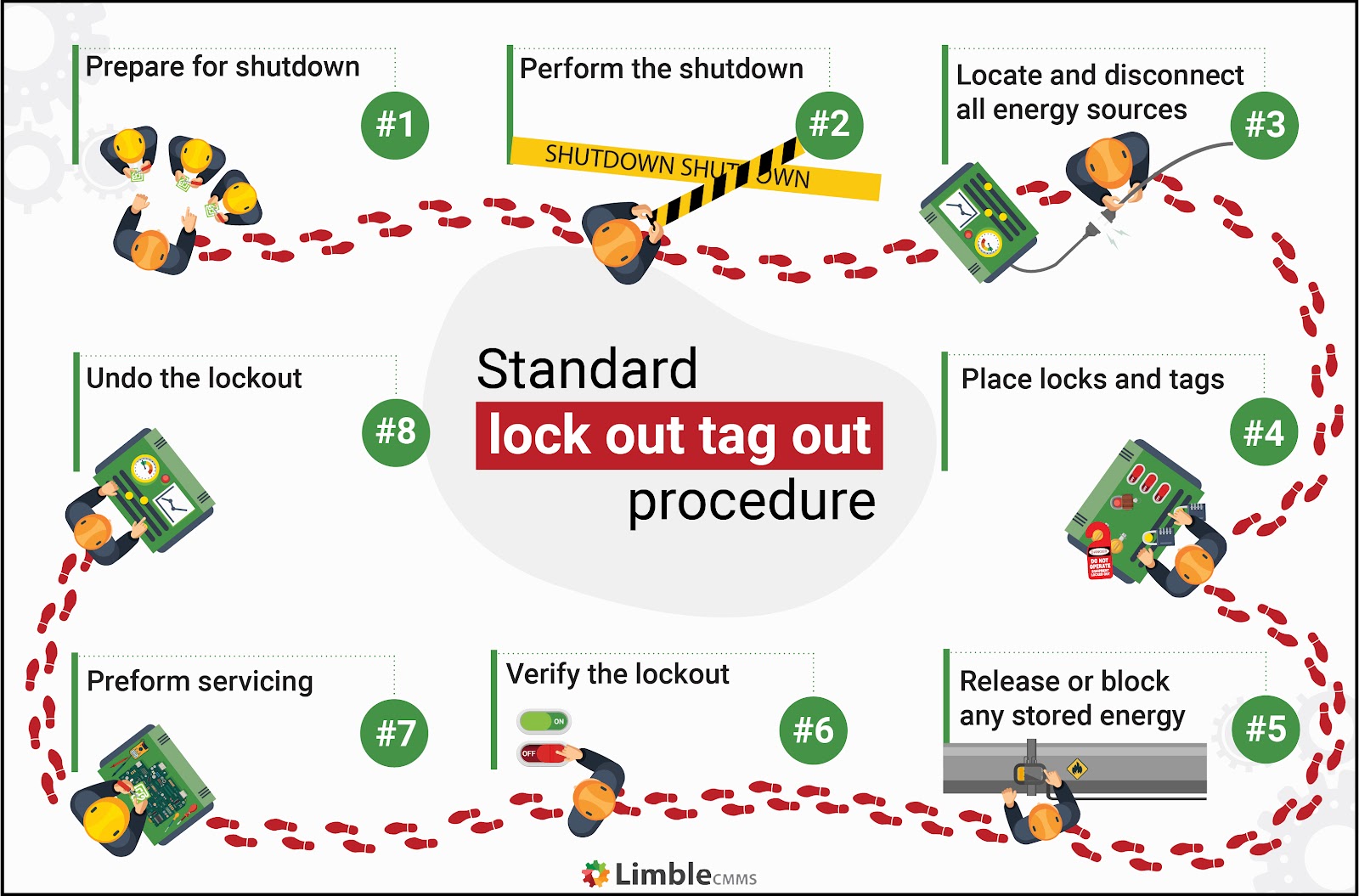
- Map All Energy Sources: Document every machine’s isolation points and energy types.
- Develop Tag Templates: Create standardized designs by equipment category.
- Train All Authorized Employees: Ensure everyone can read, apply, and verify tags.
- Link to Lock Inventories: Assign lock numbers that match tag references.
- Audit Quarterly: Check for wear, illegibility, or procedure drift.
A tag isn’t standalone—it’s part of a system that includes locks, procedures, training, and accountability.
Custom lockout tagout tags transform safety from a compliance chore into an operational advantage. They reduce ambiguity, support multi-shift coordination, and reinforce a culture where every worker knows not just that a machine is locked out—but why, how, and who is responsible. In high-stakes environments, that level of clarity isn’t optional. It’s essential. Start by auditing your current tags. If they don’t answer those three questions instantly, it’s time to go custom.
FAQ
What should you look for in Custom Lockout Tagout Tags: Why One-Size Doesn’t Fit Safety? Focus on relevance, practical value, and how well the solution matches real user intent.
Is Custom Lockout Tagout Tags: Why One-Size Doesn’t Fit Safety suitable for beginners? That depends on the workflow, but a clear step-by-step approach usually makes it easier to start.
How do you compare options around Custom Lockout Tagout Tags: Why One-Size Doesn’t Fit Safety? Compare features, trust signals, limitations, pricing, and ease of implementation.
What mistakes should you avoid? Avoid generic choices, weak validation, and decisions based only on marketing claims.
What is the next best step? Shortlist the most relevant options, validate them quickly, and refine from real-world results.