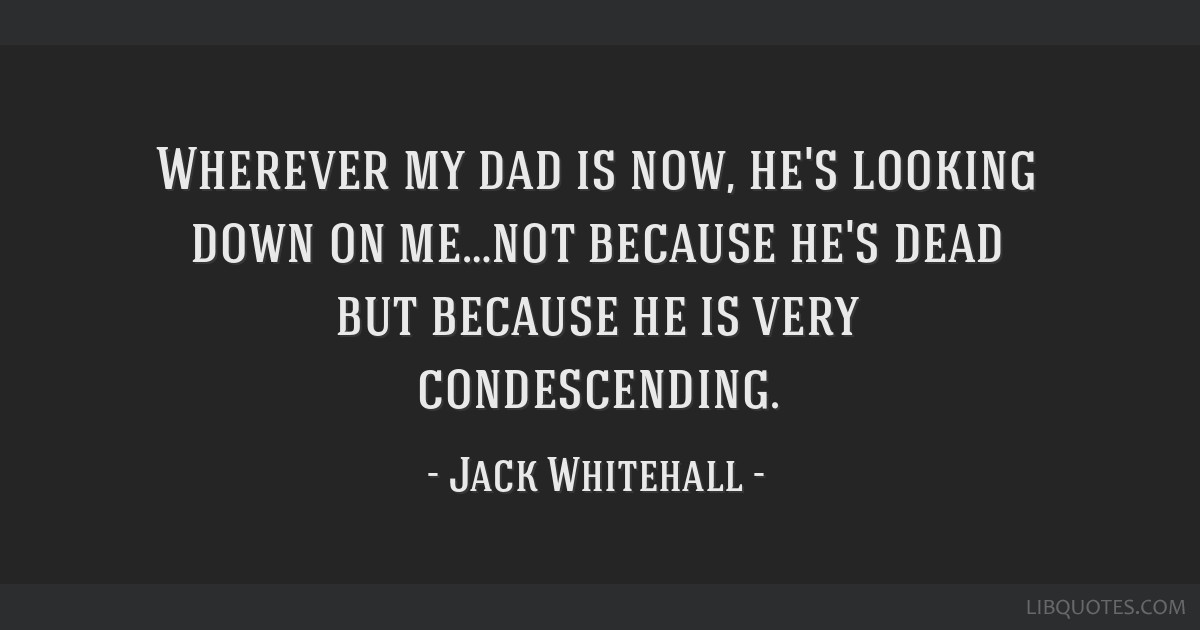
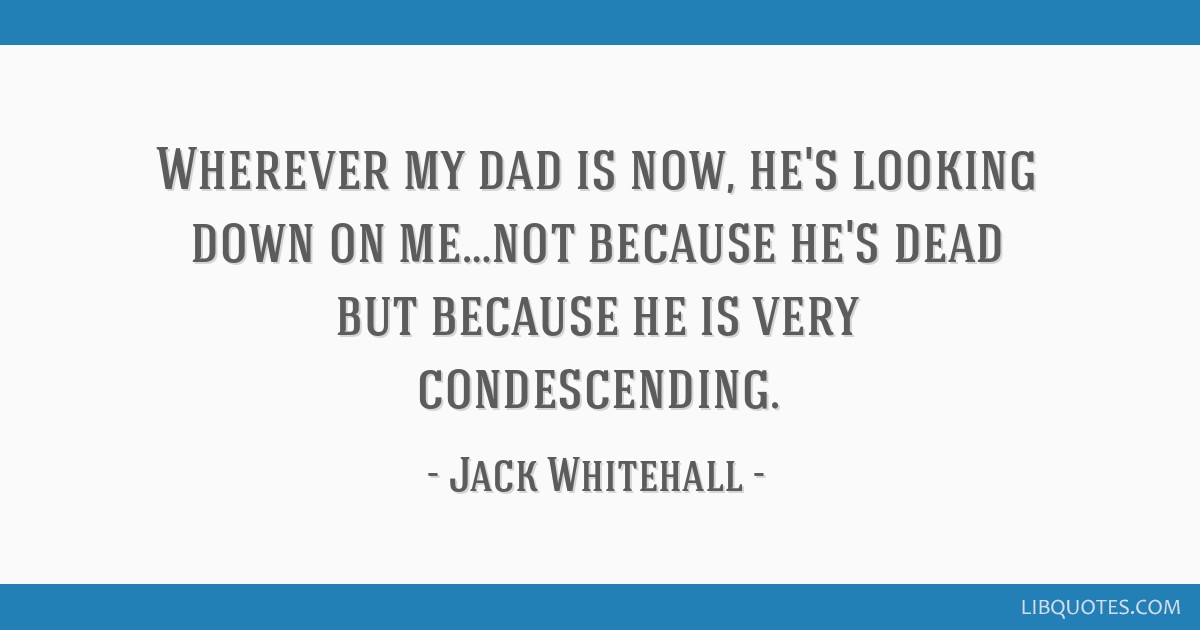
Jack Whitehall doesn’t need a podium to deliver wisdom—just a microphone, a smirk, and a well-timed pause. When he says, “I’m sure wherever my dad is, he’s looking down on us. He’s not dead, just very…”, he isn’t just setting up a punchline. He’s exposing a universal truth wrapped in British sarcasm: families lie, workplaces pretend, and honesty is both rare and revolutionary.
This single quote—often shared as a “quote of the day”—is more than viral comedy. It’s a cultural mirror. It captures the absurdity of performative respect, the quiet dysfunction in family dynamics, and the way humor disarms our defenses to reveal deeper realities about work culture, integrity, and what it means to be human.
Let’s dissect why this moment resonates far beyond the laughter.
The Anatomy of a Perfectly Awkward Truth
Jack Whitehall’s comedic genius lies in his ability to weaponize awkwardness. In the quote, he mimics the cliché funeral eulogy trope—“He’s looking down on us”—only to undercut it immediately: “He’s not dead, just very…” The pause says everything. The audience fills in the blank: distant, disapproving, emotionally unavailable.
But the brilliance isn’t just in the delivery. It’s in how it reflects real-life emotional evasion. How many of us say “I’m fine” when we’re not? How often do workplaces encourage “positive vibes only,” even during layoffs or burnout?
Whitehall exposes the gap between what we say and what we mean—especially in high-pressure environments.
Real-world example: Imagine a team meeting where the manager says, “We’re like a family here.” But when someone requests mental health leave, they’re subtly pressured to “tough it out.” The dissonance is real. Whitehall’s quote mirrors that hypocrisy—only he calls it out with a laugh instead of silence.
Honesty as Disruption in Modern Work Culture
Modern work culture often rewards harmony over truth. Feedback is softened. Tensions are ignored. Employees learn to nod along rather than speak up. But Whitehall’s humor thrives on disruption—on saying the quiet part loud.
When he jokes about his father being “very…”—emotionally restrained, perhaps—what he’s really highlighting is the cost of unspoken truths. In families and offices alike, silence breeds resentment. Denial stifles growth.
Workplace implications of Whitehall’s honesty:
| Behavior | Consequence | Real-World Parallel |
|---|---|---|
| Avoiding hard conversations | Eroded trust | A team lead ignores conflict between two senior members, leading to a project collapse |
| Over-relying on clichés | Lack of authenticity | “Let’s circle back” becomes a shield for inaction |
| Emotional suppression | Burnout | Employees fake enthusiasm during company-wide “culture days” while quietly disengaging |
Whitehall’s comedic lens forces us to ask: What are we pretending not to see in our own environments?
He doesn’t offer a self-help roadmap. Instead, he uses satire to spotlight the absurd. And in doing so, he makes honesty feel not just necessary—but possible.
The British Comedy Filter: Sarcasm as Survival Tool
Jack Whitehall is part of a long lineage of British comedians—from Ricky Gervais to Phoebe Robinson—who use sarcasm to navigate emotional complexity. In cultures where overt emotion is often deemed “unprofessional” or “vulgar,” humor becomes a covert channel for truth-telling.
The British workplace, much like the British family, runs on polite repression. You don’t say your boss is out of touch—you say, “He’s got a very unique perspective.” You don’t say your dad doesn’t show affection—you say, “He’s not dead, just very…”
This linguistic dance isn’t just about comedy. It’s about emotional survival.
Why sarcasm works: - It disarms tension without confrontation - It allows criticism while maintaining social harmony - It gives the speaker plausible deniability (“I was joking!”)
But there’s a fine line. When sarcasm becomes the only language we speak, it can erode genuine connection. Whitehall’s quote works because it’s almost sincere—then it pivots into absurdity. That balance keeps it relatable, not cynical.
Parenting, Performance, and the Myth of Perfection
Whitehall’s relationship with his father, Michael Whitehall, has been central to his act—from Jack Whitehall: Travels with My Father to live stand-up tours. Their dynamic is both touching and painfully real: a son seeking approval from a man raised in an era where emotional expression was weakness.
The quote “I’m sure wherever my dad is, he’s looking down on us. He’s not dead, just very…” isn’t just a joke. It’s a commentary on generational emotional gaps.
Common patterns in traditional parenting (and workplace leadership): - Prioritizing discipline over dialogue - Valuing stoicism over vulnerability - Confusing silence with strength
But Whitehall doesn’t vilify his father. Instead, he humanizes him—by laughing with him, not at him. That’s a subtle but crucial distinction.
This dynamic plays out in offices daily. Leaders who manage through authority rather than empathy create cultures of quiet compliance. Employees follow rules, not values. Innovation stalls. Trust erodes.
The solution? Not to mock, but to mirror Whitehall’s approach: use humor to open doors, then walk through them with honesty.
Human Nature in Three Sentences: What
We Avoid and Why
Strip away the laughter, and Whitehall’s quote reveals uncomfortable truths about human nature:
- We fear directness. Saying “My dad emotionally neglects me” is harder than joking, “He’s not dead, just very…”
- We normalize dysfunction. We accept emotionally distant parents, toxic bosses, and passive-aggressive coworkers as “just how things are.”
- We use humor as armor. Laughter lets us say painful things without being vulnerable.
These aren’t quirks—they’re survival mechanisms. But they come at a cost.
Case study: The “Nice” Workplace That’s Actually Toxic A tech startup markets itself as “a fun, family-like culture.” But when an employee raises concerns about workload, they’re told, “We’re all in this together—just push through.” No structural changes follow. Morale drops. Turnover spikes.
Sound familiar? It should. It’s the real-life version of “He’s looking down on us. He’s not dead, just very… overworked and unappreciated.”
Whitehall’s comedy works because it’s specific. It names the unnamed. And in doing so, it gives us permission to do the same.
Why This Quote Endures as “Quote of the Day” Material
Quotes go viral for one of two reasons: they’re profound, or they’re relatable. Whitehall’s line is both.
It’s shared not because it offers life-changing advice, but because it recognizes the advice we already know but ignore. It’s a nudge, not a lecture.
Compare it to other widely shared quotes: - “Be the change you wish to see” — noble, but vague. - “Success is not final, failure is not fatal” — inspiring, but abstract. - “He’s not dead, just very…” — immediate, specific, and devastatingly accurate.
Its staying power comes from its emotional precision. It captures a moment millions have lived: the gap between appearance and reality, between what we’re told to feel and what we actually feel.
Applying Whitehall’s Lens: From Laughter to Action
So what do we do with this?
You don’t need to become a comedian. But you can adopt Whitehall’s observational honesty in your own life.
- Practical steps:
- Name the unspoken. In meetings, ask: “What are we not saying right now?”
- Replace clichés with clarity. Swap “We’re like a family” for “We’re a team that values accountability and care.”
- Use humor strategically. A well-placed joke can open a conversation about stress, workload, or emotional safety.
- Check your “very.” When you say someone is “very busy” or “very focused,” ask: What am I really trying to say? Distance? Disconnection?
Humor isn’t an escape. It’s a tool. And when used like Whitehall does, it becomes a form of emotional intelligence.
Final Thought: The Courage in the Pause
The most powerful part of the quote isn’t the words. It’s the silence after “very…”
That pause is where truth lives. Not in the label, but in the hesitation—the moment we almost speak, then don’t.
Jack Whitehall gives us permission to lean into that pause. To name it. To laugh at it. And then, maybe, to change it.
In a world that rewards performance over honesty, that kind of courage—wrapped in comedy—is rare. And necessary.
Act on it today: Identify one unspoken truth in your life—personal or professional. Say it out loud. Even if you start with a joke.
FAQ
What should you look for in Jack Whitehall’s Quote of the Day: Humor, Truth, and Human Nature? Focus on relevance, practical value, and how well the solution matches real user intent.
Is Jack Whitehall’s Quote of the Day: Humor, Truth, and Human Nature suitable for beginners? That depends on the workflow, but a clear step-by-step approach usually makes it easier to start.
How do you compare options around Jack Whitehall’s Quote of the Day: Humor, Truth, and Human Nature? Compare features, trust signals, limitations, pricing, and ease of implementation.
What mistakes should you avoid? Avoid generic choices, weak validation, and decisions based only on marketing claims.
What is the next best step? Shortlist the most relevant options, validate them quickly, and refine from real-world results.