
Growing up in a crowded household wasn’t just about shared bedrooms and hand-me-down clothes—it was survival. For Bob Hope, one of America’s most enduring entertainers, it was also training. “I grew up with six brothers,” he once quipped. “That’s how I learned to dance.” On the surface, it’s classic Hope: sharp, self-deprecating, and instantly funny. But beneath the punchline lies a reservoir of insight on relationships, resilience, and the subtle politics of family life.
This single line—often shared as a quote of the day—holds disproportionate weight. It doesn’t just reflect a crowded childhood. It reveals how early environments shape communication, competition, and conflict resolution. And in a culture increasingly defined by isolation, digital detachment, and performative individualism, Hope’s wit offers something surprisingly profound: a masterclass in human dynamics.
Let’s unpack it—not as a joke, but as a lens.
The Real Meaning Behind “I Learned to Dance”
Bob Hope’s line isn’t about literal dancing. It’s about timing, space, and anticipation. In a house with six brothers, personal boundaries dissolve. Privacy is a myth. Every move—reaching for the last pancake, claiming the bathroom, changing the radio station—requires split-second awareness of others.
You don’t just act. You react. You learn to read body language before it’s spoken. You develop peripheral vision for emotional landmines. You master the art of deflection, timing, and strategic retreat.
This is what Hope meant by “dancing.” Not tap shoes and ballroom gowns—but the daily choreography of coexistence. In homes where resources are limited and attention is scarce, you either adapt or get trampled.
Consider a real-life scenario: - Morning chaos: Seven boys, one bathroom, 30 minutes before school. - Outcome: You don’t just wait. You watch. You anticipate when someone will exit. You move in just as the door opens—split-second timing. - Skill developed: Situational awareness, patience, and the ability to seize opportunity.
That’s not just survival. It’s social intelligence in its rawest form.
How Sibling Rivalry Builds Emotional Agility
Relationships—even the most supportive—are rarely smooth. Bob Hope didn’t grow up in a sitcom-perfect family. He grew up in Cleveland, Ohio, in a working-class immigrant household. His father was a stonemason. Money was tight. Space was tighter.
With six brothers, conflict wasn’t avoidable—it was constant. But constant conflict, when managed, becomes training.
Here’s what Hope’s upbringing taught—lessons that apply far beyond childhood:
- Negotiation under pressure: You learn to barter (“I’ll do your chores if you let me use the bike”) before you understand the word “diplomacy.”
- Humor as deflection: A well-timed joke can defuse a fight before it starts. Hope didn’t just use humor on stage—he likely used it to survive dinner table arguments.
- Resilience through repetition: Getting knocked down six times a day teaches you how to get back up the seventh.
These aren’t soft skills. They’re survival tools—and they translate directly into adult relationships. Whether you’re navigating office politics, marital disagreements, or parenting challenges, the ability to read a room, adjust your timing, and keep moving is invaluable.
The Politics of Proximity: Family as a Micro-Society
Hope’s quote hints at something deeper: family as the first political system we experience.
Think about it. In any group of seven boys, alliances form. Power shifts. Factions emerge. Someone becomes the ringleader. Someone else is the peacemaker. Another is the rebel.
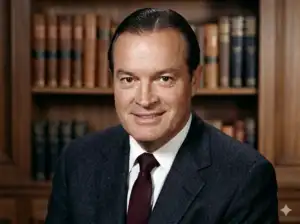
That’s not just sibling rivalry—it’s proto-politics.
And Hope, as the second of seven children, wasn’t at the top or the bottom. He was in the middle—where observation beats dominance. Middle children often develop keen social radar. They’re less likely to lead outright, but more likely to influence behind the scenes.
This shaped his comedy. Hope never positioned himself as the “alpha” on stage. He was the observer, the wisecracker, the guy who saw the absurdity in power structures and gently mocked them. Whether joking about presidents or bureaucracy, his humor carried the nuance of someone who understood hierarchy from the inside.
Real-world application? - In team environments, people who grew up with siblings often adapt faster. - They’re less threatened by competition. - They’re more likely to use humor to ease tension. - They understand that leadership isn’t always about being loudest—it’s about timing and positioning.
Aging with Grace: Humor as a Coping Mechanism
Bob Hope lived to be 100. And until nearly the end, he kept performing, joking, and engaging with the world. His quote about dancing with brothers wasn’t nostalgia—it was a philosophy.
Aging, like family life, requires adaptation. Bodies slow. Roles shift. Friends pass. But Hope’s humor never aged out. Why?
Because he treated life like that crowded house: always moving, always adjusting.
He didn’t resist change. He danced with it.
Consider these parallels:
| Childhood Challenge | Aging Challenge | Shared Skill |
|---|---|---|
| Competing for space | Adapting to reduced mobility | Spatial awareness |
| Managing loud siblings | Coping with hearing loss | Active listening |
| Joking to survive | Joking to endure loss | Emotional resilience |
Hope’s ability to laugh at himself—his age, his quirks, his fading relevance—wasn’t evasion. It was control. By naming the discomfort, he disarmed it.
Too many people approach aging with dread, as if it’s a failure. But Hope’s life suggests an alternative: see it as another crowded room. You don’t dominate it. You move through it—with rhythm, timing, and a well-placed quip.
Humor as a Bridge, Not a Shield
One common misinterpretation of Hope’s quote is that he used humor to escape pain. But the truth is more nuanced.
He didn’t use jokes to hide. He used them to connect.
When he said, “I learned to dance,” he wasn’t saying, “My childhood was hard.” He was saying, “We made it work—and here’s how.”
That’s the difference between defensive humor and generative humor.
- Defensive: “I joke because I’m hurt.”
- Generative: “I joke to bring people together.”
Hope’s comedy, especially in his USO tours, was generative. He didn’t mock soldiers for their situation. He joined them in it. He made them feel seen.
The same applies to family. In a household of seven boys, humor wasn’t just relief—it was glue. It turned competition into camaraderie. It made scarcity feel lighter.
Modern relationships often lack this. We take ourselves too seriously. We fear conflict so much that we avoid honest conversation. We forget that a well-timed joke can say what a lecture cannot.
Why This Quote Resonates Today
We live in an era of disconnection. More people live alone. Family structures are looser. Digital communication replaces face-to-face interaction.
And yet, the need for emotional intelligence has never been greater.
Bob Hope’s quote endures because it captures a universal truth: we learn to live with others by living with others.
Not through theory. Not through self-help books. But through daily friction, compromise, and the thousand small decisions that define coexistence.
You don’t learn emotional intelligence by reading about it. You learn it by: - Waiting your turn. - Letting someone else go first. - Knowing when to speak—and when to shut up. - Laughing when things go wrong.
These are the unspoken skills that no school teaches. But a crowded household does.
Practical Lessons for Modern Life
You don’t need six brothers to apply Hope’s wisdom. You just need awareness.
Here’s how to bring his “dancing” mindset into your world:
- Practice situational awareness
- - In meetings, notice who’s speaking, who’s silent, who’s frustrated.
- - Adjust your timing. Don’t interrupt—enter the conversation when it’s open.
- Use humor strategically
- - Not to mock, but to ease tension.
- - Example: If a project fails, say, “Well, that didn’t go as planned—but at least we’re all still breathing.” Lightens the mood without dismissing the issue.
- Embrace shared space as training
- - Roommates, coworkers, family—treat every interaction as practice.
- - Ask: What can I learn about people here?
- Age with curiosity, not resistance
- - Instead of mourning lost abilities, focus on new rhythms.
- - Can’t run marathons? Try walking with intention. Can’t party all night? Host quiet dinners.
- Let go of the need to lead
- - Not every room needs a star. Sometimes, the most valuable person is the one who listens, supports, and occasionally cracks a joke at the right time.
Bob Hope wasn’t trying to be wise when he made that remark. He was just telling a story. But sometimes, the best wisdom comes disguised as a punchline.
Closing: Dance Where You’re Standing
“I grew up with six brothers—that’s how I learned to dance.”
It’s not just a quote. It’s a metaphor for life.
We’re all sharing the floor. We bump into each other. We step on toes. We wait our turn.
The goal isn’t perfection. It’s rhythm.
So pay attention. Move with awareness. Laugh when you stumble. And never stop adapting.
Because life isn’t about having the most space—it’s about moving well in the space you’ve got.
FAQ
What did Bob Hope mean by “I learned to dance”? He was referring to the need for timing, awareness, and adaptability growing up in a crowded household with six brothers—skills that translated into his social and comedic intelligence.
How did Bob Hope’s family influence his comedy? His upbringing taught him to read people, use humor to defuse tension, and navigate complex social dynamics—all of which shaped his observational, relatable style.
Did Bob Hope have six brothers? Yes. Bob Hope was the second of seven sons born to William and Aida Hope.
What life lessons can we learn from Bob Hope’s quote? The importance of emotional agility, humor in conflict, resilience through shared experiences, and adapting to constraints with grace.
How does this quote apply to relationships today? It reminds us that healthy relationships require space, timing, and awareness—skills often learned through early family interactions.
Was Bob Hope’s humor used as a coping mechanism? Yes, but not in a dismissive way. He used humor to connect, endure hardship, and humanize difficult situations.
How can I apply “dancing” in my daily life? By practicing patience, reading social cues, using light humor in tense moments, and adjusting your behavior based on your environment.
FAQ
What should you look for in Bob Hope’s Life Lessons on Relationships, Age, and Politics? Focus on relevance, practical value, and how well the solution matches real user intent.
Is Bob Hope’s Life Lessons on Relationships, Age, and Politics suitable for beginners? That depends on the workflow, but a clear step-by-step approach usually makes it easier to start.
How do you compare options around Bob Hope’s Life Lessons on Relationships, Age, and Politics? Compare features, trust signals, limitations, pricing, and ease of implementation.
What mistakes should you avoid? Avoid generic choices, weak validation, and decisions based only on marketing claims.
What is the next best step? Shortlist the most relevant options, validate them quickly, and refine from real-world results.